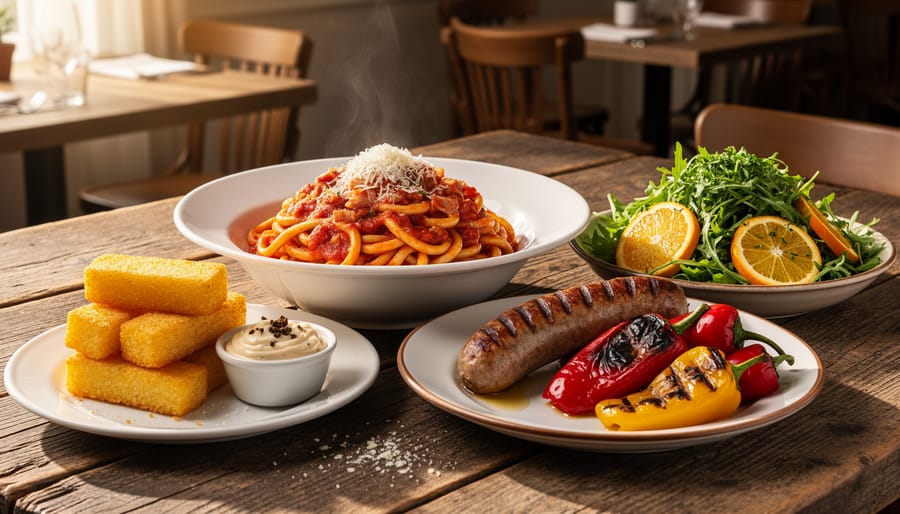
A good Italian food menu moves in a simple, delicious order: a crispy or savory starter, a bowl of pasta or pillowy gnocchi, something grilled from the secondi side, and a fresh, colourful plate to keep things bright. Order that way and you’ll taste the whole story of the kitchen in a single sitting.
Think of this list as your menu cheat sheet. We’ve gathered eight dishes that show up on real Italian menus right now, from polenta sticks with truffle mayo and Milanese mondeghili to ravioli di zucca, bucatini amatriciana, and gnocchi with pesto. Add grilled Italian sausages, a superfood insalata for lunch, and the chef’s limited-time specials, and you’ve got a plan for almost any appetite.
What ties them together is the cooking itself. Fresh ingredients, patient technique, and recipes that have been handed down for generations do most of the talking. Read on, and you’ll walk into your next Italian meal knowing exactly what to order and why it’s worth it.
How We Chose These Italian Menu Favourites
Think of this list the way a good Italian meal unfolds: one dish from each part of the menu, so you can taste the whole story. Each pick stands for a different course, from antipasti and primi to secondi, contorni and a seasonal special, and each leans on traditional technique and the promise of fresh ingredients. We also kept to dishes that showed up in verified, current menu examples, the kind of plates Italian nonnas would eat without hesitation.
Here’s what guided every choice:
- Authenticity of technique, from hand-shaped pasta to slow-built sauces
- Freshness of ingredients and how well they shine locally
- Variety across the courses of an Italian menu
- Seasonal appeal, whether cozy or summery
- Approachability for first-time Italian diners
One honest note. The examples come from recent menus at several Italian restaurants and markets, not from a Vancouver ranking. We’re celebrating dishes here, not ranking venues, so use these as a guide to what to look for and ask about wherever you dine.
1. Polenta Sticks with Truffle Mayo, a Crispy Start to the Meal
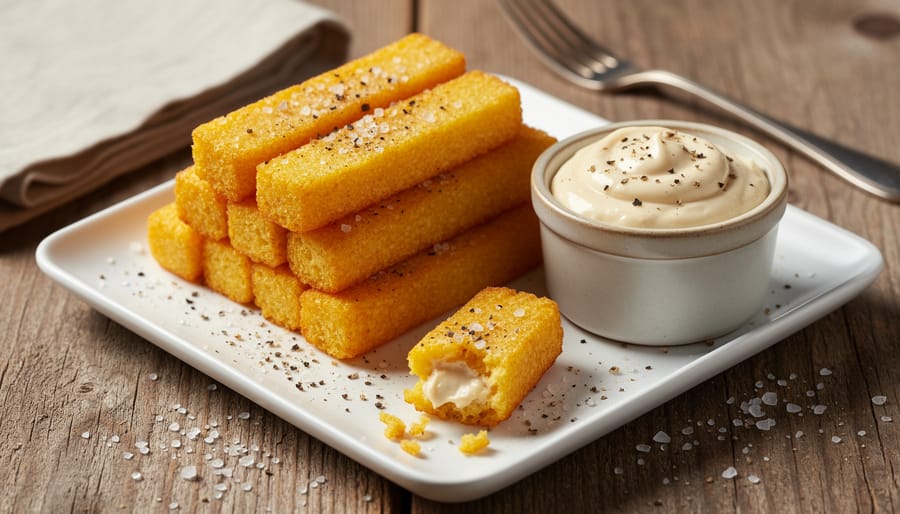
Some meals deserve a crunch before anything else, and polenta sticks answer that call beautifully. Poleenta Sticks with truffle mayo turned up among the new Italian menu items at Ritorno, and the dish captures what makes an antipasto so welcoming: it’s simple, shareable, and a little bit indulgent.
Picture a stick of polenta with a golden, crisp outside that gives way to a soft, creamy centre. That contrast is the whole charm. Polenta itself is a beloved staple of northern Italy, a humble cornmeal porridge that cooks have turned into comfort food for generations, and shaping it into sticks gives it a playful, finger-food edge.
The truffle mayo is what dresses it up. A cool, earthy dip next to the warm, crunchy sticks makes every bite feel a touch more special than the ingredients might suggest.
Because they’re easy to pass around, polenta sticks make a natural starter for the table. Order a plate for everyone to share while you decide on pasta, and you’ve set the tone for an unhurried Italian meal.
2. Mondeghili, Deep-Fried Flat Meatballs with Milanese Roots
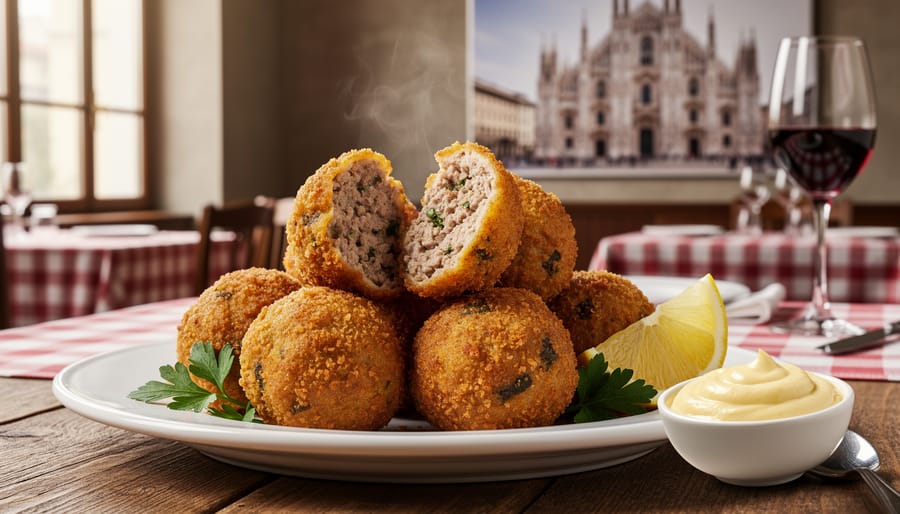
If you’ve never met a mondeghilo, think of it as the Milanese answer to the meatball, only flatter and crispier. These deep-fried flat meatballs come from a thrifty kitchen tradition. Milan’s home cooks were known for turning leftover meat into something good, bound together, shaped by hand, and sent into hot oil.
That origin is what makes them so charming. Nothing about a mondeghilo is fussy. It’s humble cooking, and the frying is what lifts it from leftovers to something you can’t stop eating.
Order one and you’ll hear it before you taste it: that quiet sizzle as the plate arrives, then the crunch of the golden crust giving way to a tender, savoury centre. Because they’re flat rather than round, there’s more surface to crisp up, which means more of that satisfying crackle in every bite.
You’ll find mondeghili on some modern menus, including Ritorno’s new Italian lineup, where they’re listed simply as deep-fried flat meatballs. Treat them as a shareable starter, something to pass around the table while you decide on pasta.
3. Ravioli di Zucca, Pumpkin-Filled Pasta for Cozy Evenings
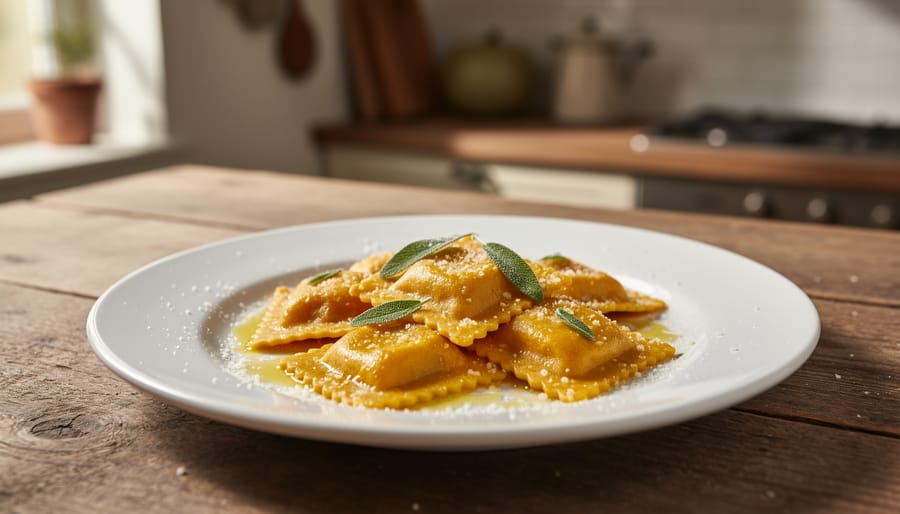
When the evenings turn cool, few plates feel as comforting as ravioli di zucca. Ritorno’s new Italian menu lists Ravioli di Zucca among its recent additions, and it’s a dish that shows exactly why filled pasta earns its place on any Italian food menu.
Zucca simply means pumpkin or winter squash, and the filling is where the magic lives. Roasted squash turns sweet and deeply earthy, and it’s often softened into a smooth, spoonable stuffing with a little cheese. Traditionally, the filling is what a cook builds the whole dish around, so seasonal squash at its peak makes all the difference. If you can find it grown close to home, even better.
Then there’s the pasta itself. Fresh dough is rolled thin, filled, sealed, and cut by hand, and you can taste that patience in every tender, delicate bite. It’s a craft that rewards care rather than speed.
A classic way to dress it, as a matter of general tradition, is with sage and butter. The butter is gently browned until nutty, and the crisp, fragrant sage lets the squash filling stay the star. Simple, warm, and made for sharing.
4. Bucatini Amatriciana, a Roman Classic for Summer Menus
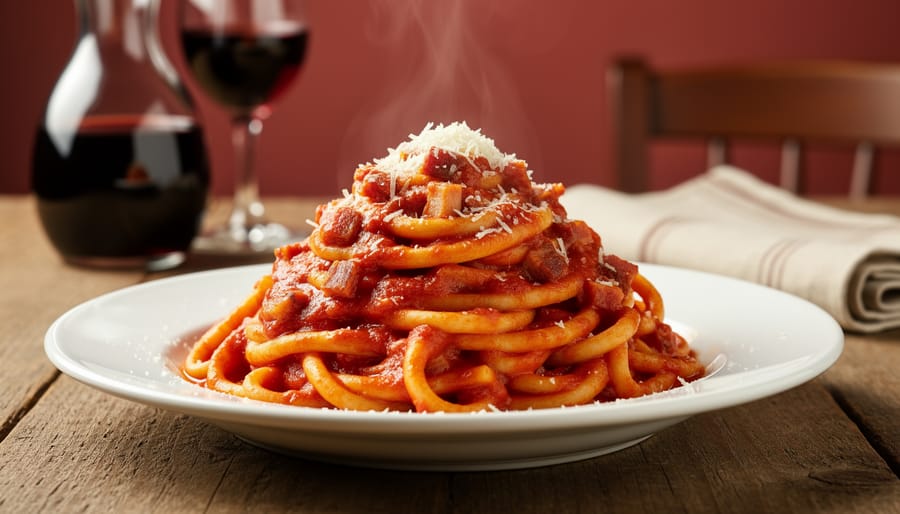
Bucatini is the long, spaghetti-like strand with a tiny hole running straight through the middle. That hollow centre catches sauce as you eat, so every forkful tastes a little richer than a solid noodle would. It’s a shape made for bold, clingy sauces, and one Italian Summer Menu example pairs it with a Roman favourite: Bucatini Amatriciana.
Amatriciana is built on just a few honest ingredients. Tomato brings brightness and a gentle sweetness, while cured pork adds a savoury, slightly smoky depth. A touch of heat is common too, and the whole thing simmers into a glossy sauce that coats each strand. Home cooks and restaurant kitchens often finish it with a shower of grated cheese, which turns it into pure comfort.
You might expect a saucy, tomato-forward dish to belong to colder months, but it suits warm weather beautifully. Summer tomatoes are at their sweetest, and the sauce comes together quickly, so the kitchen stays cooler and the flavours stay lively. Paired with something chilled, like the Tuscan Lemonade on that same summer menu, it’s a satisfying, sun-friendly plate.
5. Gnocchi with Pesto, Soft Pillows with a Fresh Basil Kiss
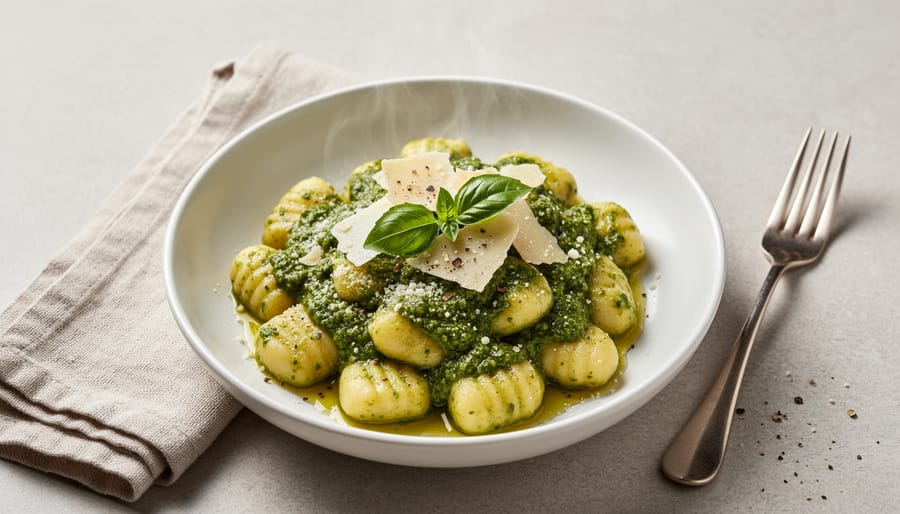
Gnocchi with pesto showed up on a recent Italian summer menu, and it’s easy to see why. These little potato dumplings are soft, pillowy, and almost cloud-like when made well. They don’t fight the sauce. They simply carry it.
And the sauce here is pesto, born in Liguria, the sunny coastal region on Italy’s northwest curve. Traditionally, it’s a bright blend of fresh basil, pine nuts, garlic, cheese, and good olive oil, pounded together until the whole thing smells like a garden after rain. One forkful and you get tender gnocchi wrapped in green, herby richness.
What makes this dish such a smart summer pick is its lightness. Compared with a heavy baked pasta, gnocchi with pesto feels fresh and breezy, the kind of course you can enjoy on a warm evening and still have room for a main. It also leans on peak-season produce, with basil at its most fragrant and flavour at its best.
If you’re dining in Vancouver, ask whether the kitchen uses locally grown basil or other regional herbs. That small detail can turn a simple plate into something memorable. Pair it with a crisp salad, and you’ve got a perfectly balanced summer course.
6. Grilled Italian Sausages, Smoky Comfort from the Secondi Side

Every Italian menu needs a main that feels like home, and grilled Italian sausages deliver exactly that. They appeared on an Italian summer menu alongside Bucatini Amatriciana and gnocchi with pesto, which tells you something: this is food made for long, warm evenings and easy sharing.
Picture the sausages coming off the grill with a deep, smoky char on the outside and a rush of savoury juices inside. Nothing fancy is needed. Good sausage, a hot flame, and a little patience are the whole recipe, and that rustic simplicity is the heart of the secondi course.
Think about what rides alongside. Something bitter, like sautéed broccoli rabe or chicory, cuts through the richness beautifully. Creamy white beans soak up every drop of juice. Roasted peppers, zucchini, or eggplant add sweetness and a little more smoke. Each pairing keeps the plate balanced, so the sausage can be the star without overwhelming you.
When you scan a menu, a simple grilled main like this is often a quiet sign of a kitchen that trusts its ingredients.
7. Superfood Insalata, a Fresh and Colourful Lunch Option
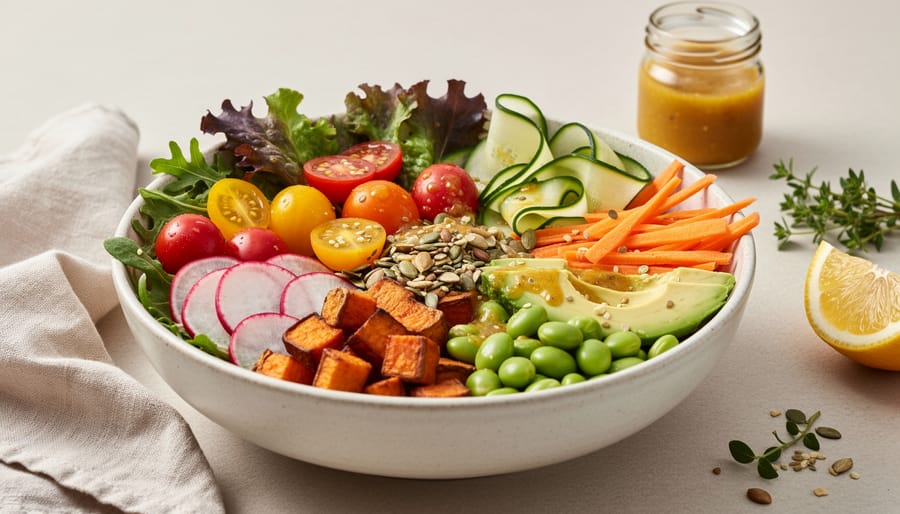
Not every Italian meal needs to arrive swimming in cream or cheese. The lighter side of the menu, the insalate and contorni, is where the kitchen lets vegetables take the lead. One restaurant we came across featured a Superfood Insalata as its lunch offering, a good reminder that Italian dining has a fresh, colourful corner too.
Insalate and contorni shine when the produce is at its peak. A handful of local greens, ripe seasonal vegetables, a generous pour of olive oil, and a squeeze of lemon or a splash of vinegar is often all you need. That simple bright acidity does real work on the table. It cuts through the richness of a creamy pasta or a char-grilled main and resets your palate between bites.
Think of it as balance, the same instinct behind every well-built Italian meal. Order a salad alongside something hearty, or make it your whole lunch on a warm afternoon. If you’re not sure where to order a fresh, vegetable-forward plate in Vancouver, start by asking what’s in season that day.
8. Chef’s Limited-Time Specials, Where the Kitchen Gets Creative
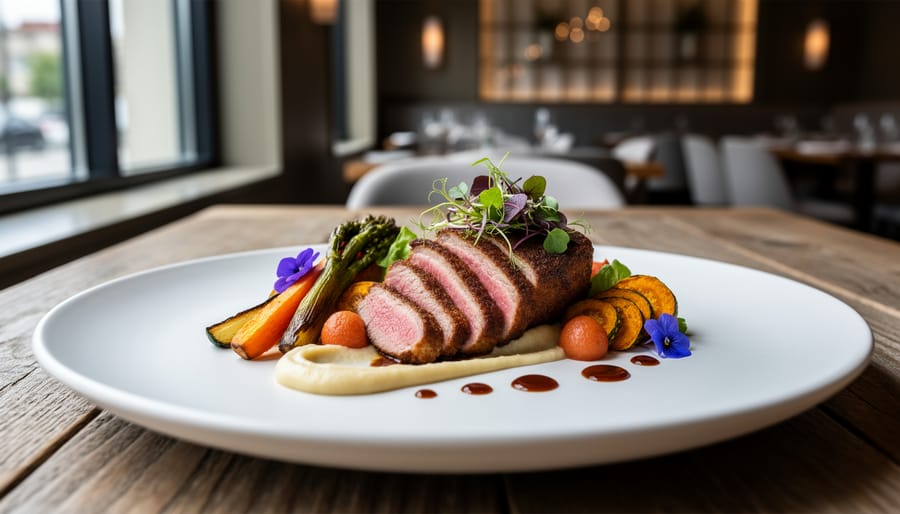
Every great Italian menu keeps a little room for surprise, and that’s where chef’s limited-time specials come in. One recent dinner menu example paired a Mushroom Truffle Steak with the usual lineup, and the restaurant noted that its chef’s featured specials are available for a limited time. That window is the whole point. Specials are built around what looked best at the market that week, so they tend to taste the freshest and most inspired thing in the kitchen.
This is how Italian cooking has always worked: it follows the calendar. Summer brings bright, herby dishes, and the cooler months lean toward earthy mushrooms, squash, and slow-cooked comfort. A rotating special is simply the kitchen telling you what season it is.
If you’re ordering at home instead, many kitchens share their specials there too, so it’s worth checking whether your favourite spot offers Italian food delivery with the same rotating dishes.
Reading an Italian Menu Like a Local: Courses and Key Details
Think of an Italian menu as a meal told in chapters. It starts with antipasti, the little openers meant for sharing, then moves to primi, the first main course, usually pasta, risotto, or soup. Secondi are the heartier mains of meat or fish, and contorni are the side dishes, often vegetables, that you order alongside them. Dolci, the sweets, close things out.
Menus also tell you when and what to order. One listing offered lunch from 12:00 pm to 3:30 pm and dinner from 4:00 pm to 8:30 pm on Wednesday, February 4, 2026, which shows how kitchens split the day into service windows. Another restaurant advertised a limited-time $12 meal special with a chicken caesar wrap and a hot honey burger, a good example of how a promo can sit alongside the traditional courses. These are only snapshots, so always confirm current hours and prices directly with the restaurant before you go.
If you’re choosing where to try all of this, the best Italian restaurant for you is often the one that lets you move through the courses at your own pace.
Italian Food Menu Questions, Answered
Italian menus follow a rhythm, and once you know it, ordering gets easy. Here are the questions first-timers ask most.
What are the main sections of an Italian menu?
Most run in order from antipasti (starters) to primi (pasta, risotto, soup), secondi (meat or fish mains), contorni (vegetable sides), and dolci (desserts). Some menus add insalate or pizza.
What is the difference between primi and secondi?
Primi are the first main course and usually centre on pasta, rice, or gnocchi, like a bucatini amatriciana. Secondi are the heartier second course, often grilled meat such as Italian sausages, served with contorni on the side.
What should a first-timer order?
Share a crisp starter like polenta sticks, then choose one pasta that sounds comforting, such as ravioli di zucca or gnocchi with pesto. Add a fresh salad if you want something lighter alongside.
Are the specials worth trying?
Usually, yes. Chef’s featured specials are often available for a limited time, so they tend to showcase what the kitchen finds freshest and most inspiring right now.
And what do you eat first at an Italian meal? Antipasti, traditionally. It’s the small, shareable opener that wakes up the appetite before the pasta arrives, so there’s no need to rush straight to the main event.
The Takeaway: Order Across the Whole Italian Menu
The best Italian meals read like a short story told in courses: a crisp starter such as polenta sticks, a handmade pasta, a hearty main off the grill, and something fresh and seasonal to finish. Order across the whole menu and you taste the full range of what a kitchen can do.
So go exploring through Vancouver’s Italian dining scene with curiosity. Ask your server about the chef’s specials, since those rotating plates are often where the freshest ideas show up. And celebrate the simple joy of good ingredients, handled with traditional technique and shared with people you love.